PhD · MBA · Lecturer

Where science
meets innovation.

I am Alexander Hermann. I connect rigorous computational science and AI with human-centered innovation, and help teams turn complex problems into results they can trust.

Computational Mechanics Agentic AI Digital Twins Design Thinking
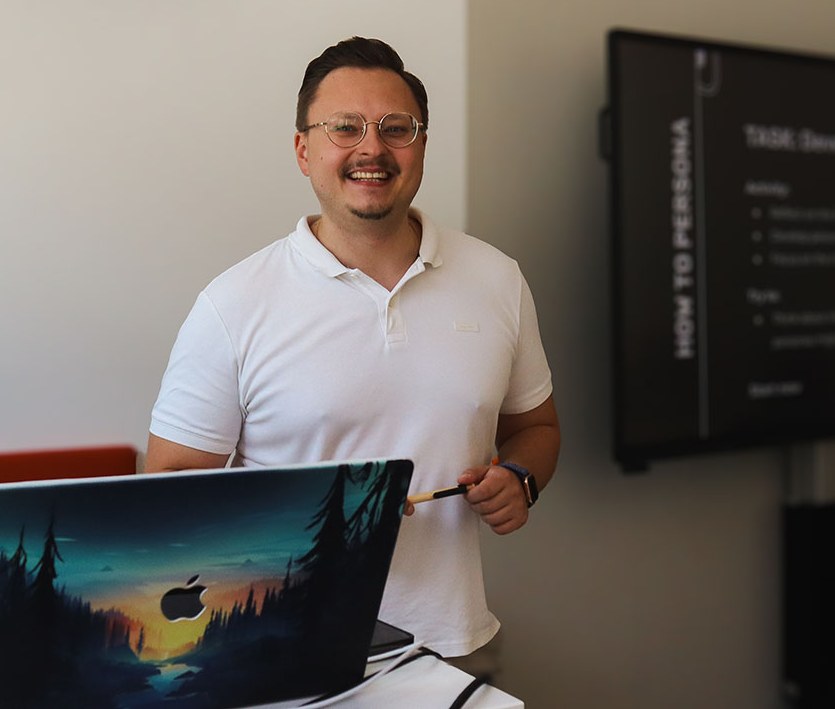
Portrait of Alexander Hermann
Hamburg, Germany · Open to collaboration
353+Citations
9h-index
16+Peer-reviewed publications
15+Open-source projects
About

Rigorous science, applied through innovation

My work sits at the intersection of computational science and innovation. On one side, I develop simulation and AI methods that describe how the physical world behaves, from the failure and degradation of materials to biodegradable medical implants. On the other, I use design thinking and innovation management to turn that knowledge into decisions, products, and ventures.

The common thread is trust. Whether it is a simulation, an AI agent, or a business decision, the goal is a result that holds up under scrutiny. My recent work on agentic AI for engineering, the OASiS framework, is built on exactly this idea: let an AI agent do the heavy lifting, but verify every result before anyone relies on it.

I completed my doctorate in computational mechanics with distinction (summa cum laude) at Hamburg University of Technology, where I now teach, lead research, and am working toward my Habilitation. Alongside my engineering background, I hold an MBA in Technology Management, and my current Doctorate in Business Administration at Liverpool John Moores University studies exactly this question of trust: how it shapes organisational resilience under pressure, and how a practical decision-support tool can help teams respond and learn after critical incidents. As a University Innovation Fellow of the Stanford d.school, I enjoy bringing that mindset to teams that want to innovate with confidence.

Background

Experience and education

Where I have worked and studied, at a glance.

Experience

  • Since 2025
    Lecturer & Habilitation candidate
    Hamburg University of Technology (TUHH)
  • 2025
    Postdoctoral Research Scientist
    CAU Innovation GmbH, Kiel
  • 2019 – 2024
    Research Associate & Doctoral Candidate
    Helmholtz-Zentrum Hereon, Geesthacht
  • 2022 – 2023
    University Innovation Fellow
    Stanford University d.school
  • 2023 – 2024
    Independent Digital Health Engineer
    Cure Data Inc., New York (remote)

Education

  • 2026 – 2029
    DBA, Business Administration
    Liverpool John Moores University
  • 2019 – 2024
    Dr.-Ing., Computational Mechanics · summa cum laude
    Hamburg University of Technology
  • 2021 – 2023
    MBA, Technology Management
    NIT Northern Institute of Technology
  • 2017 – 2019
    M.Sc., Theoretical Mechanical Engineering
    Hamburg University of Technology
  • 2013 – 2017
    B.Sc., General Engineering
    Hamburg University of Technology
Research

What I study, and why it matters

My research develops methods to model how materials and systems behave, and to make advanced simulation faster, more reliable, and easier to use.

Computational mechanics & peridynamics

I build nonlocal models that capture how materials deform, crack, and fail, including efficient methods for problems that reach beyond a finite boundary. This work makes fracture and wave simulations both more accurate and more affordable.

PeridynamicsFractureHPCC++

Biomedical implants & materials

I model magnesium-based implants and biomaterials for medicine, from bone screws to cardiovascular stents, so devices can be safer, patient-specific, and able to dissolve safely once they have done their job.

MagnesiumBiomaterialsDigital twins

AI in engineering & scientific ML

I bring agentic AI and machine learning to scientific computing, from forecasting material degradation to letting AI agents run and verify full simulations. The focus is always on reliability, so results can be trusted in practice.

Agentic AIFoundation modelsMCPForecasting
Agentic AI · Open source

OASiS: an AI agent that runs and verifies simulations

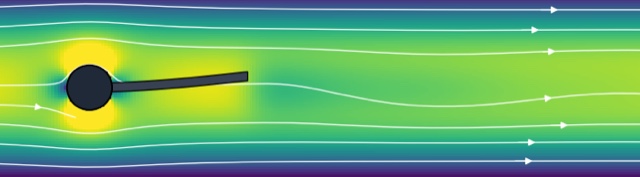
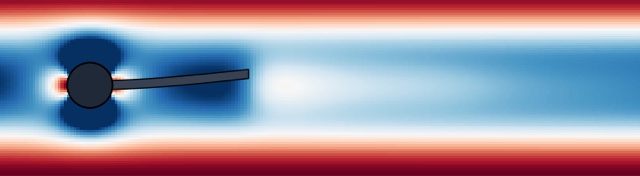
Describe a physics problem in plain language, and OASiS chooses the right solver, runs the simulation, and checks the result before it comes back to you. It connects nine open-source simulation codes and works inside AI assistants like Claude.

How OASiS works A plain-language request drives a foundation model, which works through OASiS to operate nine simulation codes; OASiS drives the codes, checks every result, revises failed runs, and returns a verified result. User prompt “Simulate laminar flow past an elastic flap and report the tip deflection.” Cognitive core any foundation model OASiS revise on failure on pass Simulation codes · 9 FEniCSx deal.II 4C NGSolve scikit-fem Kratos DUNE-fem FEBio SPARTA drive return
Verified result
Simulated velocity field around the elastic flap
velocity
Simulated pressure field around the elastic flap
pressure
From a plain-language request to a verified result.
Selected work

Simulations that answer real questions

Two areas where my models turn difficult physical problems into results you can see and build on.

Biomedical engineering

Biodegradable magnesium implants

Some implants can do their job and then dissolve safely in the body, so a patient is spared a second operation to remove them. I model how magnesium-based implants, from bone screws to cardiovascular stents, lose material and strength over time. This helps make these devices safer and tailored to each patient.

Magnesium stent
Controlled degradation over time
Coronary stent
Crimping and expansion inside an artery

More in my publications and open-source code on GitHub.

Computational neuroscience

How the brain is supplied with blood and oxygen

The brain depends on a close interplay between nerve cells, their supporting cells, and a fine network of blood vessels. I build multiscale models that show how blood flows through these vessels and how oxygen reaches the surrounding tissue, which helps researchers understand both healthy brain function and what changes in disease.

Blood flow
Pressure across the vascular network
Oxygen supply
Oxygen reaching the brain tissue

Published in the Journal of Mathematical Biology; code on GitHub.

Open-source software

Innovation & entrepreneurship

Moving good ideas into practice

Strong research only creates value when it reaches the real world. That is why I invest as much in the how of innovation as in the science itself.

As a University Innovation Fellow of the Stanford d.school, I have led design thinking workshops that help teams start from real user needs and move quickly to tested prototypes. Through the AI Startup Hub Hamburg ideation program (Winter Batch 2024) I worked on an AI-driven biosimulation concept and gained hands-on experience with early-stage validation and pre-seed fundraising. My MBA in Technology Management and my ongoing DBA on trust in decision making round out this side of my work.

Design Thinking Stanford d.school Fellow MBA, Technology Management DBA candidate Pre-seed fundraising AI Startup Hub Hamburg
Alexander Hermann presenting at a design thinking workshop
Leading a design thinking session, from user needs to defined problems.
Work with me

How I can help

Whether you want to apply AI and simulation to a hard problem, run an innovation workshop with your team, or get an expert opinion, here is what you can bring me in for.

AI & simulation

I bring agentic AI, machine learning, and high-performance simulation to real engineering and materials problems, from a first prototype to a workflow your team can rely on.

ConsultingPrototypesValidation

Design thinking & innovation

Hands-on workshops and training based on the Stanford d.school method. I help your team turn user needs into tested ideas, and coach you to run the process yourselves.

WorkshopsTrainingFacilitation

Advisory & talks

A technical second opinion on your modeling and simulation, ongoing advisory, and talks for teams, events, and universities.

AdvisorySecond opinionsTalks

Have a project or a question in mind?

Tell me a little about it. I read every message myself and usually reply within a few working days.

Start a conversation
Contact

Let us talk about your project

Whether it is a research collaboration, a consulting question, a workshop, or a talk, I would be glad to hear from you.

Your details are used only to answer your message.